Toyota Produces Next Generation Engine in Alabama

Toyota drink holder

In 2017, Toyota stated that it would be engaging in a new type of technology called Toyota New Global Architecture (TNGA) in the manufacture of next generation engines. The company was to use its facility in Alabama to produce the new engine. Last month, the first next-generation, 4-cylinder engine was produced after investing $106 million in the Huntsville facility.

The president of Toyota Motor Manufacturing in Alabama stated that he couldn’t be prouder to have achieved this goal. The recent launching of the TNGA engine is a clear statement that the company is committed to innovation through a skilled workforce. The company is moving swiftly to start advanced manufacturing. TNGA has been regarded as a better approach to the way the company engages in the design, engineering and production of automobiles and their parts. The weight of parts has been reduced, while increasing their strength through better materials and new laser welding methods. This has led to increased performance and efficiency in many stages of production.

Toyota Alabama has had four expansions since 2003. The workforce has been able to increase proportionately from 300 members in 2003 to approximately 1,500 currently. The new production line alone was able to add 50 jobs and in addition increased the total plant investment by almost $1 billion. The plant in Alabama has been hailed as one of the largest facilities by Toyota globally. As such, in 2017 alone, the plant produced over 700,000 engines for different Toyota models. Narrowing down on the specifics, this translates to 3,000 engines daily, which is a rather high figure.

It is therefore evident that Toyota Alabama has achieved commendable success in the state and is engaging in innovative strategies to maintain a top position.

Virtual Reality Therapy for Phobias in Colorado

virtual-reality-therapy

Virtual reality therapy is an innovative concept that has been found to have the potential to deal with common phobias in Colorado. It works by exposing the patients to their fears. After an estimated 20 years of research and development, the technology is finally reaching the mainstream platform and is proving to be effective.

Dick Tracey is a patient that is receiving the virtual reality therapy for his phobia of heights. Through this new technology, he was able to ride an elevator that looked the same as in reality. It looked so real that he fell onto his knees. However, he was able to face his fear remembering that it was only in virtual reality and is on the verge of healing. It is therefore evident that virtual reality could end up helping many patients that have a broad range of phobias. In addition to the health benefits, the new technology is quite affordable and more consumer focused. As such, over time, there is the possibility of patients treating themselves at home considering the rise of gaming platforms and concepts with regards to virtual reality. Virtual reality exposure therapy is considered a streamlined version of exposure therapy due to its flexibility. It can be dispensed to a huge number of people globally through the Internet.

Virtual reality technology was initially intended to benefit gamers. However, after a long period of research and innovation, this technology has been extended to industries such as the health sciences where it holds the potential to heal many conditions through therapy. It is applicable to many types of patients, from children dealing with anxiety to adults dealing with spider phobias. It is a positive innovative step to the residents of Colorado and the surrounding communities.

Drones and Smart Irrigation Systems Boost Farming Production in Colorado

Drones and Smart Irrigation Systems Boost Farming Production in Colorado

In recent times in Colorado, technology is finding its way from the urban centers to the rural farmland. Key innovations in agriculture are boosting farmers’ activities – from using their resources more efficiently to increasing their yields. Dr. Greg Graff of Colorado State University said that the technological advancements in agriculture in the last half of the century have doubled the production capabilities of the state.

In the state of Colorado, smart irrigation systems and drones have been adopted to change the way crops are planted, maintained and even harvested. Moreover, these agriscience tools facilitate an increased rate of efficiency, especially with regards to pest and disease control, water use and fertilization. Before the adoption of technologies like drones, farmers would estimate the health of their farms through the inspection of a small sample of the field. This was inefficient and could result in the loss of huge portions of crops. However, with the modern innovative projects in the state, farmers have better control of their properties. Drones can analyze the entire field, identify specifically where the problems are and farmers can therefore take the appropriate action before yields are spoilt.

The smart irrigation systems are being installed through an active collaboration between Sustainable Agriculture Research & Education educators and farmers in Colorado. Through these, farmers are able to customize their watering schedule and monitor soil conditions, plant water and even evaporation rates. This has an overflow effect as weeds and disease are also reduced through these practices due to the water being distributed directly to the roots, which minimizes the amount of water that builds up on the surface. Additionally, sensors are coupled with the irrigation systems and integrated with smartphones. Farmers can therefore control their crops with their personal devices.

Initiatives like drone technology and smart irrigation systems are helping to revolutionize the farming industry in Colorado. As technology gets better and better, it will be exciting to see the difference that future developments make to the sector.

An Innovative Irrigation Project to Help Farmers in Alabama

irrigation

Currently, only 15 percent of the available land for farming in the state of Alabama is irrigated. This is quite low compared to other states such as Georgia at 40 percent and Mississippi at 61 percent. The low figures in Alabama mean that the agricultural sector is dealing with a huge loss of revenue for the state.

Brenda Ortiz, Associate Professor at the Auburn University College of Agriculture’s Department of Crop, Soil & Environmental Sciences, asserted  that many farmers in the state are faced with a dilemma in deciding when and how much to irrigate, leading to a loss in yield potential. As such, numerous farmers in the state consider irrigation as a new practice and hence need support in terms of training, innovating, technology and information for effective decision making. However, this is set to be solved as numerous agencies and institutions have come together with the goal of increasing the practice of irrigation. Their focus is to close the knowledge gap with the other states and at the same time boost the agricultural sector through innovation and research and technology.

Numerous sources of funding have come in handy for the stakeholders in this sector. For instance, in late 2017, $946,684 was given to Auburn from the Conservation and Innovation Program of the Natural Resources and Conservation Service. This was aimed at boosting an irrigation project that constituted better water irrigation practices. Moreover, the project made use of climate information to support water management practices, as most of the state’s rainfall occurs during the non-crop-growing periods.

The project will help to educate farmers on the potential irrigation decisions that can be made from the data collected. Some farms are irrigating only around 35 percent of their cropland and farmers are keen to increase this number as much as possible. Strategies include variable-rate irrigation to focus on the areas that need the most water as well as drip irrigation and soil-sensor technology. Projects will be completed in farms located in Greenbrier, Town Creek and Tanner.

Microgrid by Alabama Power Improves Quality of Life For Reynolds Landing Residents

solar-panel

Recently, Alabama Power unveiled a power system that is to provide electricity for the Reynolds Landing ‘Smart Neighborhood’ in Ross Bridge. The innovative power system is a microgrid and is unique in the sense that although it is connected to the main power systems, it is capable of functioning on its own.

Alabama Power has been quick to note that this project will be the first of its kind to sustain the whole community of residents. A major selling point of the microgrid is the fact that it is capable of producing an estimated 600,000 kilowatt hours of power on a yearly basis. This amount is supposedly enough to support the 62 homes in Reynolds Landing. Additionally, there is a lithium ion battery and a natural gas driven generator that backs up the microgrid. The neighborhood has been receiving alternating forms of power, including the battery bank and gas-powered generator but is not yet using the solar panels alone.

Alabama Power is focusing on collecting data on the microgrid to help the company plan for future programs and energy solutions. The United States Chamber of Commerce announced that the Reynolds Landing microgrid project is the first in the Global Energy Institute’s energy innovation campaign efforts. As such, the neighborhood has been praised for being a role model for innovative solutions in the energy sector.

The homes in Reynolds Landing have been built by Signature Homes and have energy efficient features such as triple pane windows as well as thicker walls for better insulation. They are also equipped with ‘smart home technology’ where an owner is able to control locks, lights, electronics and more from a remote location. Furthermore, each house has the newest Samsung appliances and a Google mesh Wi-Fi system, which provides a strong Internet connection in each room. The collaboration between Alabama Power and Signature Homes has made it possible to implement innovative, energy-efficient technologies to improve the quality of life for its residents.

Innovative Aerospace Products Made In Alabama

aerospace

Alabama’s aerospace industry is developing products that could prove vital for the growing sector. Some of these developments were showcased at the 2018 Farnborough International Airshow in the UK. Here are some of the most impressive:

Inflatable Satellite Communications

This technology has been able to enhance high-bandwidth satellite communications, especially in remote areas. GATR Technologies is behind this product and state that it can be applied in broad areas that range from commercial, military and organizational set ups. Due to the product’s portability and light weight, it prevented Puerto Rico from being cut off from satellite communications completely by Hurricane Maria. As such, it was able to maintain Wi-Fi hotspots and cellphone signals. The company plans to expand to Huntsville and increase its workforce to 250 by 2019.

Rocket Drone Airplane

This product is an unmanned plane that has the ability to launch satellites in every 3 hours. The product has been dubbed Ravn and was created by Huntsville-based startup called Aevum. Its unique ability to launch every 180 minutes is the product’s main selling point, as other launch vehicles are able to fly only a few times per year with long lead times. Aevum has plans to launch numerous tiny satellites into space, which would improve communication networks globally.

Missile Defense Targets

A new operation in Huntsville is focused on the design and production of modified ballistic re-entry vehicles. These are unique to warheads in the sense that the re-entry vehicles have modified sensors that are able to accurately measure the effectiveness of the target. This way, enemy missiles are able to be detected and destroyed by the hosts’ defense system. This innovative product is headed by Lockheed Martin and is bound to be employed in a number of sectors such as the military.

As it is, Alabama is keen on engaging in research and development in all industries, the aerospace industry being of no exception. If your company is conducting R&D, you may qualify for the R&D tax credit. Take our eligibility test to find out whether you could benefit.

Small Hospital Innovation in Alabama

Hospital innovation

The Springhill Medical Centre is a modern hospital that is based in Mobile, Alabama. This hospital can take in over 250 patients and operates in a crowded, competitive healthcare sector. Since it is a private, for-profit health institution, it is always on the verge of looking for innovative tools so as to stand out from its competitors.

Springhill has been able to engage in innovation and research and development as illustrated by the following approaches.

Advanced Imaging Equipment, Infrastructure and Robots

  • Springhill has been able to adopt technology in an effort to boost outcomes and efficiency. In this, the hospital was the first in the state to use the da Vinci Xi robotic surgery system. The hospital is also one of the first in the world to use Cisco VoIP electronic health records. The Chief Information Officer at the hospital states that in order to remain competitive and profitable at the present era, companies must engage in innovative activities.

Listening to the Physicians

  • Throughout the years, the physicians at the Springhill Medical Centre have always been focused on innovation, consumer satisfaction and remaining competitive. Currently, the physicians are involved in several committees where they give recommendations on key innovation projects. Their goal is to find something that can be done better with the aid of technological solutions. With this mindset in place, stakeholders at the facilities have been able to incorporate innovation and research and development, which has seen the institution maintain a level ahead of its competitors in the healthcare industry.

Healthcare institutions in the state of Alabama should follow in the steps of the Springhill Medical Center as it is clear that innovation is a vital facet in generating better healthcare. As such, firms should aim at producing better technology that is sustainable or that improves on existing frameworks.

R&D Activity In Illinois Stagnant Since 2011

r&d spending stagnant

A report by the Illinois Science & Technology Coalition has stated that R&D spending in Illinois is five time slower than the national growth rate. This has been particularly evident in the machinery manufacturing and chemical industries, which are leading industries for the state.

Since the Global Financial Crisis, Illinois has found it hard to keep up with the growth of other states due to the state’s budget impasse. Smaller public universities have had to cut back on R&D activities. Computer and electronic R&D has also decreased by 1.9 percent per annum, while national annual growth has reached 4.4 percent.

While the state ranks 8th nationally, spending $16.5 billion in 2015, R&D activity has stagnated between 2011 and 2015, increasing by only 0.8 percent. R&D intensity average is behind the national average, with Illinois ranking 22nd at 2.1 percent GDP spend on R&D, as opposed to 2.7 percent nationally. Federal spend on R&D is also much lower than other states. Furthermore, business R&D activity grew at only 1.4 percent per annum, in comparison with the nationwide rate of 4.9 percent.

Nevertheless, between 2012 and 2016, large universities spent up to 8.6 percent on business-funded R&D per year. This is 34% higher than the national average of 6.4 percent. Medical sciences, chemistry and computer science were strong areas for research.  Finance and transportation equipment R&D have also grown strongly in recent years.

Why does this matter? R&D is essential to innovation, which in turn creates jobs and increases people’s quality of life through enhancements in technology. R&D helps companies to maintain their competitiveness, particularly in a global economy. Moving forward, the Illinois Science & Technology Coalition has recommended stable state funding for public universities as well as the creation of research and business collaboration opportunities. More support for early-stage R&D focussed businesses and larger wet labs would also encourage R&D activity.

The report also recommended making the Illinois R&D tax credit permanent. Over the past 15 years, the credit has lapsed four times. This creates uncertainty for businesses as they are unsure whether they will be able to benefit from this tax offset when planning their long-term R&D activities.

Implementation of the report’s suggestions would promote significant research growth, establish partnerships between industry and universities and allow Illinois’ economy to  flourish.

$95 Million worth of grants distributed to small business research and development

microscope-275984_960_720

In acknowledgment of the major roles small businesses play in spurring innovation and creating jobs in the U.S. economy, the U.S. Department of Energy (DOE) have awarded $95 million worth of small business research and development (R&D) grants.

The grants will be funded through DOE’s Small Business Innovation Research (SBIR) and Small Business Technology (STTR) programs to 80 small businesses and consisting of 95 grants in total.

The SBIR and STTR programs were created by congress to leverage small businesses to advance innovation at federal agencies.

Below are the selected grants for each of the R&D programs that provided funding for the projects:

  • Office of Defence Nuclear Non-proliferation
  • Office of Electricity Delivery and Energy Reliability
  • Office of Energy Efficiency and Renewable Energy
  • Office of Fossil Energy
  • Office of Fusion Energy Sciences
  • Office of High Energy Physics
  • Office of Nuclear Energy

Did you know that you can receive up to 14% back on your research expenses with the R&D Tax Credit? To find out more, please contact a Swanson Reed R&D Specialist today or check out our free online eligibility test.

Who We Are:

Swanson Reed is a Specialist R&D tax advisory firm, offering tax credibility assessments, claim preparation, and advisory services to the state of Texas. We manage all facets of the R&D tax credit program in Texas, from claim prep & audit compliance to claim disputes.

Swanson Reed regularly hosts free webinars and provides free IRS CE and CPE credits for CPAs.  For more information please visit us at www.swansonreed.com/webinars or contact your usual Swanson Reed representative.

Disease to Ease: Allen Institute develops 3D cell model to aid disease research

microscope

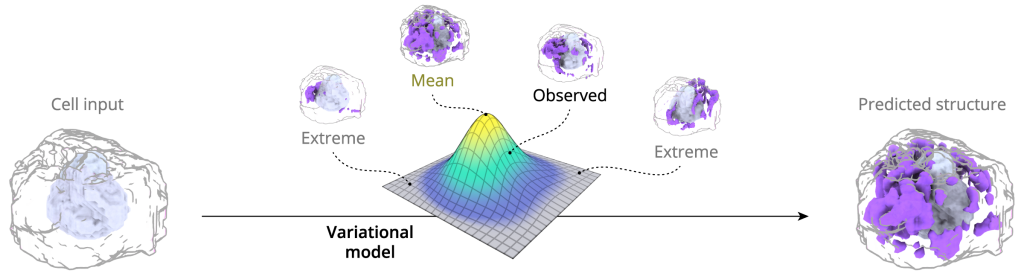
A Seattle-based research organization, the Allen Institute for Cell Science, has developed an Integrated Cell program that shows the various organelles within cells, specifically stem cells—even if they haven’t been mapped yet.

In a summary from the institutes’ Integrated Cell website, “the Allen Integrated Cell unites two technologies to improve our understanding of how human induced pluripotent stem cells (hiPSCs) vary in both shape and organization. One is a deterministic model, which shows the organization of organelles in particular individual cells, and the other model is probabilistic – showing likely shapes and locations for organelles in any cell – even for cells we have not studied.” To put the probabilistic model into visual perspective, here’s a diagram that outlines the variation model:

”This is a new way to see inside living human cells. It’s like seeing the whole cell for the first time. In the future, this will impact drug discovery, disease research and how we frame basic studies involving human cells,” said Rick Horwitz, Ph.D., Executive Director of the Allen Institute.

The new modelling method will also help to reduce fluorescence toxicity in cells when they are being studied. “Fluorescence microscopy is expensive and toxic to cells; increasingly so when you tag multiple structures,” said Molly Maleckar, Ph.D., Director of Modeling. “Our approach allows scientists to view cells and conduct experiments at the reduced cost of brightfield microscopy, with the structure-identifying power of fluorescence microscopy – and without its toxic effects. It’s really the best of both worlds.”

The full press release can be found here.

Are you pushing the technological boundaries of disease research or cellular biology? Did you know your R&D experiments could be eligible for the R&D Tax Credit and you can receive up to 14% back on your expenses? To find out more, please contact a Swanson Reed R&D Specialist today or check out our free online eligibility test.

Who We Are:

Swanson Reed is Texas’ largest Specialist R&D tax advisory firm, offering tax credibility assessments, claim preparation, and advisory services. We manage all facets of the R&D tax credit program in Texas, from claim prep & audit compliance to claim disputes. 

Swanson Reed regularly hosts free webinars and provides free IRS CE and CPE credits for CPA’s.  For more information please visit us at www.swansonreed.com/webinars or contact your usual Swanson Reed representative.