Timing Issues for Texas R&D Tax Credit Claims

Calendar 600

It’s upon us: that time of year when we have to schlep through mountains of financial paperwork and rack our brains to remember major life events, minor purchases, and everything in between. Yes, tax season is officially here.

Indeed, as we edge closer to spring, we also get progressively closer  to tax day – April 15. Just like spring cleaning your home, now can be a good time to get your financials in order.

However, with tax day drawing near, it’s important to know what dates apply to your State in order to prevent overlooking deadlines. Therefore, in our latest short video tutorial, we divulge the timing issues for the Texas R&D Tax Credit claim process to prevent any delays or missed cutoffs.

Watch the on YouTube here: https://www.youtube.com/watch?v=QkdYQhlBeuQ

Or alternatively, watch below:


Swanson Reed is a specialist R&D tax firm and has helped many clients across a diverse range of industries. Contact us for more information on how we can advance your company’s market value and boost its bottom line through the Research and Development Tax Credit.

Texas’ Sweeping Startup Ecosystem

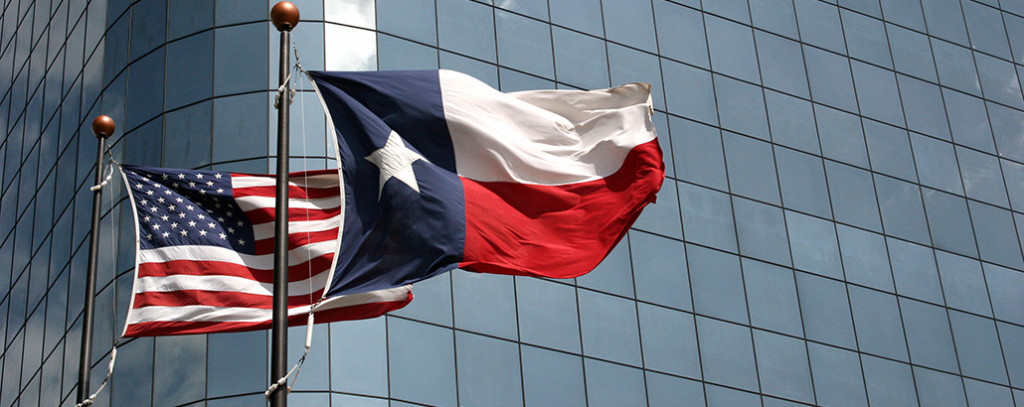
TX and USA flags

When the phrase “start-ups in Texas” is mentioned, the city of Austin is typically the first place that may come to mind. Indeed, Austin does have a thriving start-up culture, one that frequently ranks highly on voguish start up hubs list. However, merely 200 miles northeast exists one of the United States’ largest business networks, base to 18 Fortune 500 company headquarters and where 25 billionaires call home.

Dallas – whilst the mention of the city may conjure images of Dallas Cowboys, Cheerleaders, or even the popular film, Dallas Buyers Club – is the city set to have a new reputation as a prosperous start-up hub?

Indeed, from the peppering of “sir” and “ma’am” in sentences to chicken-fried steak as a menu option, it is hard to resist the sweet Texan drawl and dining options. But Dallas has other benefits, in particular, a burgeoning business scene. This is due to a favorable tax environment and a collective Texan “can-do” attitude. Moreover, the region alone vaunts a list of entrepreneurs who found their affluence in oil and gas, semiconductors and real estate.

In 2015 in particular, the Dallas entrepreneurial ecosystem has been bustling with activity. For instance, according to PitchBook data, Angel investors invested $213.5 million into 35 start-ups in the first nine months of this year.  That’s approximately three times last year’s total angel investments of $73.4 million in 42 deals. Thus, similar to Austin, a new generation of innovators, young start-ups and the digital savvy are putting North Texas on the world map as an innovation mecca, rivalling the likes of other cities such as Miami and New York.

However, it is important to note that Dallas is creating its own unique start-up ecosystem that is different from other cities. To begin with, the sheer size of Dallas, encompassing 9,200 square miles, indicates business is going to be conducted a little differently compared to the consumer-facing start-ups that inhabit tech hubs such as Silicon Valley.

In relation to this entrepreneur Craig Lewis, the founder of Dallas-based Visage Payroll, describes the evolution of Dallas. Lewis states, “It went from the cheerleading stage, where everybody said Dallas could be a start-up community, to you’re starting to see valuable companies form and people are getting legitimate pieces of funding; maybe not massive rounds but strong rounds. What’s more interesting is a lot of us are building strong businesses, substantive businesses in comparison to the fly-by-nights you see in other ecosystems.”

Thus, rather than paralleling Dallas with Silicon Valley or any other innovation mecca, entrepreneur Lewis labels it best, “We don’t have to do it like other start-up communities. We just need to be Dallas. There’s just one Dallas. Let’s just be the best Dallas we can be.” Furthermore, statistics such as the fact that Dallas is in the top 20 region for number of patents issued , has the 6th largest concentration of high tech workers in the U.S., and is the 5th largest metro in self-employment in the U.S.,  reinforce the idea that Dallas is indeed a suitable environment for start-ups.

Certainly, as this article reveals, the city of Dallas – aside from serving up niche food options and a friendly Texan attitude –  also propositions a business-friendly state. With a thriving start-up network that is growing, the innovation ecosystem in the state of Texas is flourishing. Moreover, the R&D tax credit can help put cash back into start-ups and several states, including Texas, offer businesses their own version of the R&D tax credit.  Individuals should take advantage of any R&D tax credits available at the state and federal levels as they can claim the credits concurrently. Contact us today to talk to a specialized R&D Tax professional who will be able to answer any questions you may have.

Texas’ Growth in Small Business Fortifies Economic Diversity

bigstock Texas Star 84460247

Believed to be the engine of job creation in the United States, small businesses are fundamentally the basic building blocks of our economy. Their value and the role they play in our economy is often underestimated as, they are in fact, small. But the truth is there’s nothing minor about the impact they have on our financial state.

Take Texas, for example, where the plunging price of a barrel of oil has forced layoffs across the state. Despite the downturn of one of the State’s key industries, small businesses are still hiring workers at positive pace. In fact, Texas ranks fourth in the nation in jobs added by companies that employ fewer than 50 people. Dallas, in particular, observed the highest growth rate among major metropolitan areas – adding small business jobs at a 1.6 percent annual rate.

Essentially, these small employers are helping soften the blow of layoffs in the oil and gas industry brought on by low commodity prices. Considering that over 50% of the working population (120 million individuals) works in a small business, their survival and growth in hardship is indicative of Texas’ diverse and strong economy.

In addition, thriving small businesses also serve as a bulwark against the global economy as they rely less on overseas customers and focus more on local innovation. Furthermore, as a consequence of the downturn of the oil and gas industry in Texas, the need for innovation is burgeoning. Research and Development (R&D), plays a critical role in the economic growth of a country and essentially spurs the innovation necessary for a strong U.S. economy. Most notably, there is one policy that has allowed for the expedition of innovation and R&D in the United States and that is the R&D tax credit.

However, historically, many startup companies and small businesses were unable to benefit from the research credit due to operating losses or alternative minimum tax limitations.  However, in addition to making the research credit permanent, the Protecting Americans from Tax Hikes (PATH) Act added two new provisions that are effective January 1, 2016. These two provisions are designed to increase the number of startups and small to mid-sized businesses that can benefit from the credit. In our last post, we went into details of both of these two modifications to the credit.

It is imperative, nonetheless, that businesses recognize what kinds of costs are eligible in order to maximize the credit so that appropriate records can be sustained throughout the year. Swanson Reed’s R&D tax professionals are available to discuss the R&D tax credit and the changes in the new PATH Act – contact us today if you would like to know if your company now qualifies.

Leading the Way with Innovation: Wearable Sensors to Translate Sign Language

Approximately 20 percent of Americans report some degree of hearing loss and over 6 million are profoundly deaf. Now, wearable sensors could one day depict the gestures in sign language and translate them into English, administrating a high-tech solution to communication difficulties between deaf people and those who don’t comprehend sign language.

Science writingLeading this study is engineers at the Texas A&M University, who are currently developing wearable sensors that can sense movement and muscle activity in a person’s arm. Although still in the prototype stage, the device can recognize around 40 ASL signs with 96 percent accuracy. The device operates by interpreting the gestures a person is creating by using two distinct sensors: one that responds to the motion of the wrist and the other to the muscular movements in the arm. A wireless program then  obtains this data and converts the information into the English translation.

The sensors are worn on the user’s wrist and the information collected is sent via Bluetooth to a laptop. Eventually, the goal is to abolish the need for the laptop by integrating a small computer directly to the device. The computer could then transfer the English words to another person’s phone, so they can read what their partner is saying. Roozbeh Jafari, the engineer who led the project, wants the final version to be small and attractive, with the end goal of making the entire system fit in a watch.

Undoubtedly, innovation such as this will make a huge difference in the lives of deaf people and how we interact with the world around us. Whether you’re creating communication devices for the deaf or researching agricultural prototypes, each company has unique levels of research and development utilized within their business. The government encourages businesses within the U.S. to do this by allowing business owners to offset research and development with R&D Tax Credits. Posing the question, could you be claiming cash back for research and development projects you’ve invested in? Innovation can create new opportunities for your business and allow for the creation of new products or solutions. Contact us today to see if you are eligible to claim the R&D Tax Relief.

Incentives For Conducting Business In Texas

In the past year, Texas has been ranked the number one state for future job growth and was listed in the top ten states for business. I tip my hat to you, Texas.

Although, this all means nothing if the incentives and benefits put in place by the state are being underutilized by businesses. It’s important to know why Texas ranks so highly and exactly what sets Texas apart from the rest. ( hint: it’s more than the food).

Texas Emerging Technology Fund

The Texas Emerging Technology Fund (TETF) was established to provide Texas with an unprecedented advantage in areas of research, development and commercialization of emerging technology. TETF is available in three areas:

  1. Incentives for Commercialization Activities Awards: Funds to help companies take ideas from concept to development to ready for the marketplace.
  2. Research Award Matching Awards: Funds create public-private partnerships which leverage the unique strengths of universities, federal government grant programs and industry.
  3. Acquisition of Research Superiority Awards: Funds for Texas higher education institutions to recruit the best research talent in the world.

Regional Centers of Innovation and Commercialization

The Regional Centers of Innovation and Commercialization (RCICs) were created to support the activities for a specified region; research and development, commercialization of research and development, incubation and acceleration for business related to research and development, and workforce training for business related to research and development.

The Research and Development Tax Credit

On June 14, 2013, House Bill 800 was signed reinstating Texas R&D tax credits through 2026. Much of the work done on a federal R&D tax credit return applies to a Texas return, so you can essentially get two tax credits for one tax workup.

In order to achieve a benefit from R&D in Texas, the taxpayer makes one of two elections ; the franchise tax credit for R&D expenditures or the sales and use tax exemption on the purchase or lease of depreciable, tangible personal property used in qualified research in Texas.

Texas Enterprise Fund

The Texas Enterprise Fund is a cash grant used a financial incentive tool for projects that offer significant projected job creation and capital investment. The TEF has granted more than $500 million in grants since its creation in 2004.

If your company is interested in claiming the R&D Tax Credit  please contact one of our Swanson Reed specialists for more information.


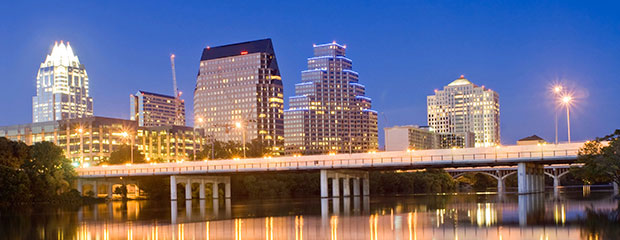
A nice clean shot of the Texas State Capitol Building in downtown Austin, Texas.

Austin Continues To Be a Nurturing Environment for Tech Startups in 2015

Over the past few years, we have seen Austin become  one of the top places in the country for digital technology companies and the attraction to the city doesn’t seem to be ending anytime soon.

The 2014 Annual Report states that in 2014, investors funded 115 startups and bought 31 companies in Austin. The local tech companies raised $993 million in investment dollars and exits totaled $437 million.

After experiencing a 41.4% increase in tech-industry employment between 2001 and 2013, Austin was recently named the top city for technology job creation by Forbes. The Austin Technology Council, which integrates tech leaders into daily life in Austin, foresees nearly 12,000 more tech jobs to be added over the next five years.

With major companies like Dell and startup incubators such as Techstars headquartered in Austin, it is no mystery why Austin continues to flourish. According to their website, Techstars is “a global ecosystem that empowers entrepreneurs to bring new technologies to market wherever they choose to build their business.” Techstars provides funding and mentorship to startup companies around the world.

Due to the lively tech community that has settled in Austin and the networking resources available, entrepreneurs are able to easily collaborate and connect with one another as well as potential investors.

Texas also offers $19 billion per year in incentives for things like job creation, relocating business to Texas and R&D performed in Texas. The R&D tax credit for qualified research and development that is conducted within the state, provides  up to a 6.125% credit rate. The Texas R&D tax credit adopts the guidelines of the federal R&D tax credit, meaning one can essentially receive two credits for one tax workup. Unlike the federal credit, the Texas credit is valid until 2026.

If your company is conducting R&D within the United States and would like more information on claiming the credit, please contact a Swanson Reed specialist.


AUSTIN