Giving Feeling to Robots & Prosthetics: Researchers at UT Dallas develop artificial touch-sense whiskers

touch

Whiskers are arguably the cutest feature on a dog or cat:


cute-cat-3    cutecat2

cutedog1     cutedog2

Need we say more? Those pleasant-looking features are used as touch sensors that send information to an animal’s brain. It’s one way that an animal makes sense of their surroundings. This is why it’s important to not trim Fido’s or Tom’s whiskers. Researchers at the University of Texas at Dallas realized this importance and have created artificial whiskers, appropriately called ‘e-whiskers’.

“We’ve created some of the highest density of e-whiskers to date,” said Dr. Walter Voit, an associate professor of materials science engineering and mechanical engineering at UT Dallas. “When you have a lot of sensors like this that can be dragged over a surface, you can then use them to measure many interesting properties. Our e-whiskers were able to detect force, pressure, proximity, temperature, stiffness and topography. As they brush up against—or whisk across—various materials, they mimic the sensing capabilities of human skin.” The development of e-whiskers is a significant step in the advancement of electronic human skin, which could be used in the fields of robotics and even prosthetics.

E-whiskers were developed by using shape-memory polymers that react to heat. A flexible strain sensor, which has the same diameter as a human hair, was attached to the top of a polymer pattern. Researchers then blew hot air through the bottom of the polymer cutouts, thus making the material soft. This allowed the e-whiskers to rise and become 3D. Any disturbance induced changes that interacts with the strain sensor is then tracked, thus giving ‘life’ to the polymer cutouts.

“In robotics, e-whiskers could replicate the functionalities of human skin by determining what’s hard and soft, hot and cold, smooth and rough. They could allow the robot to identify objects and interact with them safely, making robots more ‘human friendly’,” said Jonathan Reeder, lead author who conducted the research.

This concept may seem like something straight out of a sci-fi novel, but it’s not that far off from becoming a reality. “Integrating electronic sensors directly with biology is the most compelling application but presents a set of tough challenges. Namely, how to translate electronic signals generated by the sensor into the ‘language’ of the nervous system, and how to form a stable mechanical and electrical coupling between the flexible electronic and the soft tissue.” Reeder also mentioned that the sensitivity of the e-whiskers, such as changes in topology and temperature, as well as the sensors’ response time, all exceed the capabilities of human skin “by at least an order of magnitude.” “It’s not impossible for a person with a prosthetic to actually have better sensitivity than with the human hand,” Reeder added.

This development offers hope to the 2 million Americans who are living with a prosthetic limb. For more information on this impressive advancement, please click here.

Are you developing a technology so robots and prosthetics can have more human-like qualities? Did you know that you can receive up to 14% back on your research expenses with the R&D Tax Credit? To find out more, please contact a Swanson Reed R&D Specialist today or check out our free online eligibility test.

Who We Are:

Swanson Reed is a Specialist R&D tax advisory firm, offering tax credibility assessments, claim preparation, and advisory services to the state of Texas. We manage all facets of the R&D tax credit program in Texas, from claim prep & audit compliance to claim disputes. 

Swanson Reed regularly hosts free webinars and provides free IRS CE and CPE credits for CPAs.  For more information please visit us at www.swansonreed.com/webinars or contact your usual Swanson Reed representative.


Alternative Fertility Monitoring in 2018: San Francisco-based Modern Fertility develops economical at-home hormone test

mother

Women are putting off having children to build up a career and economic status. Those in their 30s are having more children than women in their 20s. However, as women age, hormonal changes follow thus affecting the chances of conceiving.

Modern Fertility, a San Francisco-based startup, wants to help women ignite important fertility conversations with their doctors. To do so, Modern Fertility created an at-home hormone test. The test can be ordered online where a doctor will review the order and customize it based on the type of birth control a client is on. Once it arrives, one can choose to be tested at home or at a local Quest Diagnostics lab. The at-home test simply requires the client to prick her finger and collect a blood sample–the accumulated blood should then be placed onto the provided test strip. The strip is then sent to a CLIA Certified lab where it is tested for nine hormones. Once reviewed by a physician, a private profile is sent back that explains how hormone levels may affect the number of eggs a woman has left, if her process of ovulation is normal, and other red flags that could affect a fertility window. Other trackable signals include if the onset of menopause could happen at an earlier age, and if egg freezing or IVF is the right way to go.

Carley Leahy and Afton Vechery co-founded Modern Fertility. “We’re really speaking to women much earlier in life who know that a career may be important and they may want to have children down the road, but want to be able to check in proactively,” Leahy said. “Modern Fertility is the first step for women. We’re really working with women before they get to a doctor’s office and giving them this information so that they can have a more informed conversation with their doctor,” Vechery said. “We found that you can go to a fertility clinic and take simple blood tests to check in on where you stand. But no everyone can afford them and the results can be tricky to decipher. We use information to get smart about everything in our lives—relationships, money, school. Why is something as formative as fertility still a black box?,” a statement from Leahy and Vechery said.

The Modern Fertility hormone test costs $199 compared to a $600 clinical doctor consultation. The company still recommends consulting with your doctor about any test results. More information about Modern Fertility can be found by clicking here.

Are you making fertility monitoring more accessible or convenient? Did you know that you can receive up to 14% back on your research expenses with the R&D Tax Credit? To find out more, please contact a Swanson Reed R&D Specialist today or check out our free online eligibility test.

Who We Are:

Swanson Reed is a Specialist R&D tax advisory firm, offering tax credibility assessments, claim preparation, and advisory services to the state of California. We manage all facets of the R&D tax credit program in California, from claim prep & audit compliance to claim disputes. 

Swanson Reed regularly hosts free webinars and provides free IRS CE and CPE credits for CPAs.  For more information please visit us at www.swansonreed.com/webinars or contact your usual Swanson Reed representative.

Slurpee Inspires Improvements to Surgical Device: Engineering students at UT Austin develop ClearCam, solution for laparoscope obstruction

surgery

Inspiration for an invention can be found anywhere, and students at the Cockrell School of Engineering at the University of Texas at Austin are proof of such statement. The keen graduate students noticed that a Slurpee straw, with it’s shovel-like end, is the perfect size and shape to act as a squeegee for a laparoscope. For the sake of context, a laparoscope is a fiberoptic camera tool used during minimally invasive surgery procedures so surgeons can see the interior of a body. During a procedure, the laparoscope can become foggy and covered with bodily fluids and solids—not exactly ideal when conducting a surgery from the outside.

Under the guidance of associate professor of mechanical engineering Chris Rylander, the students designed a scoop-like shaped device that keeps the view of the internal camera clear. “This is a problem faced by surgeons every day,” said Rylander. “When a laparoscope gets dirty in the body—due to condensation or contact with blood or fatty tissue, visibility is diminished. Surgeons must stop the procedure, pull the laparoscope out of the body, wipe it off and return to the task at hand, extending the time to complete the procedure and simultaneously generating potential safety concerns.” With the increase of antibiotic resistance and MRSA, less time out of the body reduces the risk of short and long-term complications.

Rylander was approached by Dr. John Uecker of UT’s Dell Medical School who was looking for a solution to the obstructed laparoscope problem. The invention is appropriately named the ClearCam. It works by using a geometrically altered polymer that can be controlled externally to remove obstructions from the laparoscope lens without scratching it. The design of the ClearCam is based off previous prototypes that were improved to meet the needs of surgeons across the U.S.

Are you improving surgical methods? How about creating new tools that could revolutionize the operating room? Did you know that you can receive up to 14% back on your research expenses with the R&D Tax Credit? To find out more, please contact a Swanson Reed R&D Specialist today or check out our free online eligibility test.

Who We Are:

Swanson Reed is a Specialist R&D tax advisory firm, offering tax credibility assessments, claim preparation, and advisory services to the state of Texas. We manage all facets of the R&D tax credit program in Texas, from claim prep & audit compliance to claim disputes. 

Swanson Reed regularly hosts free webinars and provides free IRS CE and CPE credits for CPAs.  For more information please visit us at www.swansonreed.com/webinars or contact your usual Swanson Reed representative.

“Alexa, schedule a video call with Dr. Smith”: Austin-based startup Medici advances telehealth

telehealth

Doctor visits are a pain, and not because of that irritating chest infection or scorching fever. Wait times in the U.S. have increased 30 percent over the past four years, and that percentage is likely to rise over time, according to an article by Medscape. There is good news, though. Medici, a telehealth startup based in Austin, Texas, wants to make your doctor visits more efficient and less stressful by way of your mobile device.

Apart from doctors being overloaded, “they are buried with regulatory requirements, administrative hurdles and downward pressure on their own costs to run their practices. This burden is increasingly taking time away from doctors’ ability to focus on what really matters: providing great care for patients,” a statement from the Medici website said. “We are driven by a singular purpose. To change the doctor-patient relationship. The world is changing and healthcare must come along, too.”

The Medici application, referred to as the “WhatsApp of healthcare”, combines five principles: speed, harmony, ambition, resourcefulness and excellence. The app allows patients to contact doctors, be it physicians, dentists, therapists, even veterinarians, via text message or video call; all from a single platform. A diagnosis can be made over the app, which in return can reduce the number of patients in the waiting room. Patients can ask their doctors to join the app, or doctors can invite their patients to use it. For more context, check out the video below.

“Patients also face a growing burden, carrying more of their own healthcare costs and spending an average of 121 minutes on each medical visit they have,” the Medici website continued. “Our goal is to make global, innovative technology that will transform and truly inspire the world of healthcare.”

Are you developing new technologies to improve healthcare? Did you know that you can receive up to 14% back on your research expenses with the R&D Tax Credit? To find out more, please contact a Swanson Reed R&D Specialist today or check out our free online eligibility test.

Who We Are:

Swanson Reed is a Specialist R&D tax advisory firm, offering tax credibility assessments, claim preparation, and advisory services to the state of Texas. We manage all facets of the R&D tax credit program in Texas, from claim prep & audit compliance to claim disputes. 

Swanson Reed regularly hosts free webinars and provides free IRS CE and CPE credits for CPAs.  For more information please visit us at www.swansonreed.com/webinars or contact your usual Swanson Reed representative.

Disease to Ease: Allen Institute develops 3D cell model to aid disease research

microscope

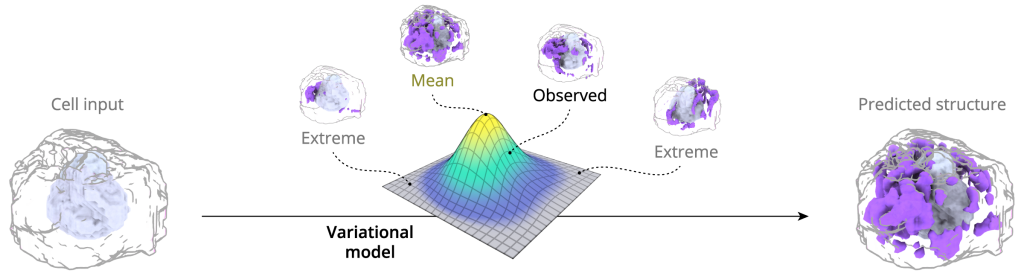
A Seattle-based research organization, the Allen Institute for Cell Science, has developed an Integrated Cell program that shows the various organelles within cells, specifically stem cells—even if they haven’t been mapped yet.

In a summary from the institutes’ Integrated Cell website, “the Allen Integrated Cell unites two technologies to improve our understanding of how human induced pluripotent stem cells (hiPSCs) vary in both shape and organization. One is a deterministic model, which shows the organization of organelles in particular individual cells, and the other model is probabilistic – showing likely shapes and locations for organelles in any cell – even for cells we have not studied.” To put the probabilistic model into visual perspective, here’s a diagram that outlines the variation model:

”This is a new way to see inside living human cells. It’s like seeing the whole cell for the first time. In the future, this will impact drug discovery, disease research and how we frame basic studies involving human cells,” said Rick Horwitz, Ph.D., Executive Director of the Allen Institute.

The new modelling method will also help to reduce fluorescence toxicity in cells when they are being studied. “Fluorescence microscopy is expensive and toxic to cells; increasingly so when you tag multiple structures,” said Molly Maleckar, Ph.D., Director of Modeling. “Our approach allows scientists to view cells and conduct experiments at the reduced cost of brightfield microscopy, with the structure-identifying power of fluorescence microscopy – and without its toxic effects. It’s really the best of both worlds.”

The full press release can be found here.

Are you pushing the technological boundaries of disease research or cellular biology? Did you know your R&D experiments could be eligible for the R&D Tax Credit and you can receive up to 14% back on your expenses? To find out more, please contact a Swanson Reed R&D Specialist today or check out our free online eligibility test.

Who We Are:

Swanson Reed is Texas’ largest Specialist R&D tax advisory firm, offering tax credibility assessments, claim preparation, and advisory services. We manage all facets of the R&D tax credit program in Texas, from claim prep & audit compliance to claim disputes. 

Swanson Reed regularly hosts free webinars and provides free IRS CE and CPE credits for CPA’s.  For more information please visit us at www.swansonreed.com/webinars or contact your usual Swanson Reed representative.
How one doctor is making the Operating Room safer with Click-to-Comply

the device 1822457 1280

We all know the high-stakes that come with surgery in the operating room but unfortunately, 50 percent of all surgeries conducted in the United States experience some sort of medication error. This is in part due to improper labeling of medication. Dr. Peter Baek, founder of Vigilant Labels, recognized that syringe labels were a major factor for this error. To combat this, Dr. Baek’s startup created the Click-to-Comply product which more accurately and more quickly produces syringe labels.

“I chose to tackle a problem that exists at almost every hospital and surgery center where intravenous medications are given to patients,” Dr. Baek said. Specializing in anesthesia and having served in the U.S. Air Force, Dr. Baek understood that it was difficult for nurse anesthetists and anesthesiologists to comply with strict regulations regarding medication labeling. For one, information on a syringe label is quite detailed, documenting the name of the preparer, the date of preparation, the name of the drug, and the barcode. Yet, common practice is that this information is printed by hand which results in illegibility as the details are scribbled and squeezed together to fit the medication label. Dr. Baek therefore started Vigilant Labels to make the process easier and more efficient. The user, whether a nurse, pharmacist, or doctor, simply clicks and the device creates a label with all the information presented in a clear manner. It is faster than writing by hand.

Click-to-Comply is now used in 14 Dallas Fort-Worth area hospitals. As Dallas Innovates stated, Vigilant Label’s Click-to-Comply product “is poised to improve compliance on a critical medical issue across the country.” Because of the company’s success, Dr. Baek has decided to pursue the Vigilant Labels’ mission full-time. He said, “Being an entrepreneur and starting a company is new for me. Quite frankly, my mindset as a doctor is to be cautious and risk adverse. However, to be a successful entrepreneur, I realize that I need to take risks and get out of my comfort zone.”

Are you also taking risks and getting out of your comfort zone to develop technologies improving the medical practice? You could be eligible for the R&D Tax Credit and receive up to 14% on your expenses. To find out more, please contact a Swanson Reed R&D Specialist today or check out our free online eligibility test.

Swanson Reed regularly hosts free webinars and provides free IRS CE credits as well as CPE credits for CPA’s.  For more information please visit us at www.swansonreed.com/webinars or contact your usual Swanson Reed representative.


“Not alone” – Cariloop uses tech to support families during tough times

not alone

Imagine you get a call one day that changes everything: your parent or grandparent is sick and will need ongoing treatment. Suddenly, you are thrust into the role of caregiver for a loved one who once cared for you. This can be a challenging experience and it is natural to feel overwhelmed and stressed. The creators behind Cariloop understand this struggle that many families across America experience and so they launched a platform to offer support to caregivers. Their promise: “No one should EVER go through the process of caring for a loved one alone.”

Founder Steven Theesfeld started the company with co-founder and current CEO Michael Walsh in 2011 in Dallas. Together, they built a support platform that helps caregivers plan and manage care for their loved ones. Cariloop users have on-demand access to a healthcare coach who is a licensed or certified healthcare professional. The healthcare coach can guide families as they make important decisions. Walsh explained in an interview, “We see it happen every day – some sort of health or medical event takes place and suddenly the entire family is scrambling to figure out what to do, how to do it, how much it costs, which options are best, on and on.”Cariloop also provides a platform where families could safely and securely communicate and store important documents like medical records, insurance cards, and other paperwork across mobile devices and desktops, similar to Slack. He said, “Rather than Googling their way through their loved one’s challenges, we’d love to showcase how our platform can save them a significant amount of time, money, and stress along their journey.”

Cariloop partners with corporate employers in delivering its services. Walsh explained the shift to working with companies from working with healthcare providers came when they noticed that most users accessed Cariloop during work hours, namely 10 am to 2 pm. As a result, Cariloop repositioned itself as an employee benefit in 2015. In doing so, Cariloop hopes to assist companies in promoting wellness among employees, especially during difficult, life-changing times.

Are you experimenting with online platforms to deliver support and healthcare like Cariloop? You could be eligible for the R&D Tax Credit and receive up to 14% back on your expenses. To find out more, please contact a Swanson Reed R&D Specialist today.

Swanson Reed regularly hosts free webinars and provides free IRS CE credits as well as CPE credits for CPA’s.  For more information please visit us at www.swansonreed.com/webinars or contact your usual Swanson Reed representative.


DFW-based Methodist Health System adopts Epic Electronic Health Record to integrate patient records

AI and R&D tax credit software

The exchange of health information between patients and providers has come a long way in the Dallas-Fort Worth (DFW) region, especially with the adoption of the Epic Electronic Health Record, but it still has a long way to go.

Earlier this year, Pamela McNutt, senior vice president and Chief Information Officer of the DFW-based Methodist Health System, launched the Epic Electronic Health Record (EHR) across the system’s 46 facilities, consisting of hospitals as well as teaching, specialty, and community practice clinics. The goal was to integrate patient records and allow patients to be on one portal. Prior to Epic’s implementation, the Methodist Health System used MEDITECH and NextGen but these did not always serve the system’s needs. McNutt explains, “[W]e really felt like we needed an integrated record. That was number one. Also, so many other people in the Dallas-Fort Worth region had Epic already, so physicians had experience using it.” With 190 million people on Epic worldwide and with most Texas providers already using Epic and its web-based service EpicCare Link, McNutt noted integration has become more accessible: “We are exchanging thousands of records every day. This exchange is happening with non-Epic providers, too.”

Of course, there are still improvements needed in the exchange of health information. Physicians are often burdened by the amount of documentation they need to do in addition to their regular practice. McNutt expressed hope that the Epic Electronic Health Record and other new technologies could assist with that burden on providers in the future, “whether it’s a tap-and-go-single sign-on with a badge, or using best practice templates.” She further added that IT systems need to be constantly upgraded to meet the changing needs of the healthcare market. Innovation is also key.

As the software company behind the Electronic Health Record, Epic is no stranger to innovation. For one, the company has introduced smartphone access to its software. It also offers programs to help patients know the risk of developing certain diseases, such as diabetes. As well, Sumit Rana, Epic’s senior vice president of research and development, imagines that tele-health will become an integral part of health care by 2018, allowing patients to participate in video appointments with their healthcare providers. Part of Epic’s success could be attributed to the fact that the company invests 50% of its operating expenses in R&D.

Did you know Epic’s R&D experiments are eligible for the R&D Tax Credit? If you are doing similar product developments like Epic, you could be eligible as well and can receive up to 14% of your R&D expenses. To find out more, please contact a Swanson Reed R&D Specialist today.

Swanson Reed regularly hosts free webinars and provides free IRS CE credits as well as CPE credits for CPA’s.  For more information please visit us at www.swansonreed.com/webinars or contact your usual Swanson Reed representative.

Fort Worth plastic surgeon’s non-invasive CoolSculpting demonstrates R&D in cosmetic surgery industry

CoolSculpting

Most people wouldn’t immediately think of research and development when they think of cosmetic surgery, but this Fort Worth-based plastic surgeon’s decision to introduce CoolSculpting in her practice demonstrates otherwise.

In a press release earlier today, Kirby Plastic Surgery in Fort Worth announced that it will offer CoolSculpting as a fat reduction treatment. Citing safety and efficacy for her clients, Dr. Emily Kirby asserts that CoolSculpting has improved in recent years and offers the product needed by clients. FDA-cleared, the procedure reduces fat by using cryolipolysis to freeze the skin and destroy fat cells without harming surrounding tissues. It reduces isolated fat bulges without the need for needles, incisions, anaesthesia, and there is no downtime for patients. From a process of research and development, CoolAdvantage was also developed. Building on the findings of CoolSculpting, CoolAdvantage treats more parts of the body, including thighs, chin, and arms, in addition to the abdomen and flanks. It is also faster than its predecessor, cutting down treatment duration from one hour to 35 minutes.

The procedure is non-invasive and more comfortable than traditional plastic surgery treatments. Dr. Kirby states, “A growing number of patients have expressed interest in minimally invasive alternatives to surgery to address effects of genetics, aging and childbearing on their bodies. My priority is to provide patients the results they want in a safe, predictable way.” Plastic surgery is on the rise, with over 11.6 million nonsurgical procedures conducted in 2016 in the United States, according to the American Society for Aesthetic Plastic Surgery. New technologies are constantly being developed.

Are you also developing new or improving existing body sculpting technologies? Did you know this constitutes R&D? If this sounds like you, you could be eligible for an R&D Tax Credit, even if your experiments and trials haven’t been successful. To find out more, please contact a Swanson Reed R&D Specialist today.

Swanson Reed regularly hosts free webinars and provides free IRS CE credits as well as CPE credits for CPA’s.  For more information please visit us at www.swansonreed.com/webinars or contact your usual Swanson Reed representative.

Fort Worth Company NanOlogy Leads the Way to Treating Prostrate Cancer

laboratory 2815640 1280

Last week, NanOlogy, a Fort Worth-based pharmaceutical company, made headlines when it enrolled its first patient in a Phase 2 clinical trial to test a new chemotherapy method to fight ovarian cancer. This week, the same company is changing the game again: this time to treat prostrate cancer.

27,000 American men die from prostrate cancer each year and about 3 million are currently diagnosed with the disease. Only patients at a higher risk for the disease’s progression are treated while those who are considered “low risk” are monitored closely and not treated. Prostatectomy is a common treatment but it is known for its side effects that decrease a patient’s quality of life, such as incontinence and impotence.

NanOlogy, in contrast, is developing a more convenient alternative with its patented intratumorally-injected NanoPac (nanoparticle paclitaxel). Currently in Phase 2 of its clinical trial, NanoPac will be monitored for its effects on safety and efficacy. Clinical Director of NanOlogy, Shelagh Verco, told Business Wire, “If we are successful, we may offer a treatment option for moderate or high risk patients with localized or non-metastatic disease without a negative impact on quality of life.” While mainstream treatments are limited to metastatic disease, NanOlogy hopes this can treat the disease before metastasis occurs. Dr. Gere diZerega, NanOlogy’s Vice President of Medical Affairs, explained, “Systemically administered paclitaxel has been shown to be effective for prostate cancer but is limited to metastatic disease. This clinical trial is the first study in humans to examine whether NanoPac injected intratumorally will effectively and safely treat the tumor with a high locally sustained concentration of the drug.”

NanOlogy is a collaboration among Fort Worth’s DFB Pharmaceuticals as well as Kansas’ CritiTech and California’s US Biotest. The firm aims to develop and improve the safety and efficacy of drug delivery by using nanoparticle technology to treat cancer. Other projects for the ambitious firm include developing treatments for lung cancer, pancreatic cancer, ovarian cancer, and others.

Are you also developing new chemotherapeutic treatments like NanOlogy using R&D? You could be eligible for the R&D Tax Credit and receive up to 14% back on your expenses. To find out more, please contact a Swanson Reed R&D Specialist today.

Swanson Reed regularly hosts free webinars and provides free IRS CE credits as well as CPE credits for CPA’s.  For more information please visit us at www.swansonreed.com/webinars or contact your usual Swanson Reed representative.