Preventing School Shootings in Texas: App encourages youth to collaborate with officials

school buses 2801134 960 720

In a world dominated by smartphone usage, a developer has created a solution for bridging the gap between an unlikely duo: law enforcement officials and students. How so? By way of an app, of course.

Developed by Microassist, a primary training vendor for the State of Texas, the DPS (Department of Public Safety) application, iWatch Texas, will allow teachers, students and parents to report anything deemed suspicious, which in return could save numerous lives.

“It’s the first statewide mobile app of its kind in the U.S. that helps citizens track, identify and report on potential criminal activity. With the rise of the mobile generation, organizations with mission critical content – like DPS – greatly benefit from expanding their reach to a wider and technologically oriented audience,” said Microassist’s CEO, Sanjay Nasta in an official press release on the company’s website.

“Making sure the information is forwarded to the correct agency is a big part of this. Before, the information might now go to the right people, might not go in a timely manner, might not be there when the information is needed,” said Lieutenant Nick Bristow of the Collin County Sheriff’s Office. “[The application] gives law enforcement and school administrators a chance to intervene before it’s too late.”

The app already encompasses useful features, such as information on most wanted fugitives, sex offenders and human trafficking. Reports are transmitted to the Austin Regional Intelligence Center (North Texas Fusion Center in McKinney for the Dallas/Fort Worth area) where the information is then vetted and passed along to analysts from local, state and federal agencies. The information is used to gather intelligence and vet security threats, and is then passed on to local law enforcement agencies and school districts, respectively.

The suspicious activity reporting feature mentioned in this article will have a separate application in the future, according to an article by NBCDFW. The iWatch Texas application, along with an official overview, can be found by clicking here.

Are you developing an application that can save lives? Did you know your R&D experiments could be eligible for the R&D Tax Credit and you can receive up to 14% back on your expenses? To find out more, please contact a Swanson Reed R&D Specialist today or check out our free online eligibility test.

Who We Are:

Swanson Reed is Texas’ largest Specialist R&D tax advisory firm, offering tax credibility assessments, claim preparation, and advisory services. We manage all facets of the R&D tax credit program in Texas, from claim prep & audit compliance to claim disputes. 

Swanson Reed regularly hosts free webinars and provides free IRS CE and CPE credits for CPA’s.  For more information please visit us at www.swansonreed.com/webinars or contact your usual Swanson Reed representative.

Saving Lives—with Wallpaper?: Researchers design wallpaper that detects fire

fire kitchen safety

If you’re redecorating your home, consider wallpaper; it may save your life.

At the Shanghai Institute of Ceramics, Chinese Academy of Sciences, Professor Ying-Jie Zhu and a team of researchers have developed a wallpaper that is made from environmentally friendly, non-flammable materials. On top of this impressive feat, the wallpaper can also prevent the spread of a fire and set off an alarm when there is a fire present. This development is great news for those who wish to be a bit more conscious of their interior surroundings. Traditional wallpaper is highly flammable because it is made up of plant cellulose fibers–not exactly something you want to line your walls with should you wish to prevent a fire from spreading.

The flame retardant paper is thanks to the same component that is found in bones and teeth: hydroxyapatite. The nanowires that are within the paper are coated with the hydroxyapatite substance. In an interview with Phys.org, Zhu said “the fire-resistant wallpaper has a white color, mechanical robustness, and high flexibility, it can be processed into various shapes, dyed with different colors, and printed with a commercial printer. Therefore, the fire alarm fire-resistant wallpaper has promising applications in high-safety interior decoration to save human lives and reduce the loss of property in a fire disaster.”

The nanowires that connect to the alarm are dependent on the burn off of graphene oxide–the material that, when completely burned off, cannot complete the circuit and set off the alarm. The researchers found this substance burned off too quickly, thus only set the alarm off for three seconds–not long enough to awaken a sound sleeper. To overcome this problem, the researchers modified the graphene with polydopamine, a natural polymer, which reduces the thermal response of the compound, thus allowing the alarm to sound for over five minutes. Graphene oxide also acts as an insulating material for electricity at room temperature, and when exposed to heat, becomes highly conductive–perfect for a sensor to set off an alarm.

The researchers hope to expand and increase production of the wallpaper while remaining environmentally conscious.

For a more information on the wallpaper, please click here.


Are you developing a technology or material that can save lives? Did you know your R&D experiments could be eligible for the R&D Tax Credit and you can receive up to 14% back on your expenses? To find out more, please contact a Swanson Reed R&D Specialist today or check out our free online eligibility test.

Who We Are:
Swanson Reed is Texas’ largest Specialist R&D tax advisory firm, offering tax credibility assessments, claim preparation, and advisory services. We manage all facets of the R&D tax credit program in Texas, from claim prep & audit compliance to claim disputes.
Swanson Reed regularly hosts free webinars and provides free IRS CE and CPE credits for CPA’s. For more information please visit us at www.swansonreed.com/webinars or contact your usual Swanson Reed representative.

“Gaming for Everyone”: Microsoft designs accessibility controller for Xbox One

588533 xbox adaptive controller

Playing the latest game on an Xbox is an easy, straightforward process for most–at least when using the controller. There’s the triggers, bumpers, face buttons, a directional pad, sticks and the iconic green guide button in the center. The question is, if you’re a gamer like Mike Luckett, how do you continue to play the latest games when the controller does not accommodate the needs of a person who has lost all finger control? After a motorcycle accident, Luckett severed his C6 spinal cord, and despite being able to move his hands, he lost the ability to control his fingers. After telling CNET he “nearly decided to quit gaming,” Luckett won’t have to.

Microsoft has developed an accessible controller for those who can’t use the traditional one, appropriately naming it the Xbox Adaptive Controller. The new controller, for $99.99, allows users of all abilities to plug switches, buttons, pressure-sensitive tubes and other attachments as desired. “We’re coming up on 2 billion people playing video games on this planet,” said Phil Spencer, the head of Microsoft’s Xbox team. “As an industry, when you start to hit that kind of impact act in terms of the broad base of people that interact with your art form, I do think we have a social responsibility.”

Image: Microsoft

For specific details on how this innovative controller works, CNET observed Luckett and said that “the key feature of the Xbox Adaptive Controller is that it has ports in its back that represent each button on a standard controller. So if Luckett needs the right-trigger button to be placed just near his elbow, for example, he can put one there and then plug it into the back of the adaptive controller. Now all he has to do is tap the button, and it registers as if he’d pulled the trigger on a standard controller.”

The Xbox Adaptive Controller will be available sometime this year. A detailed development timeline and more information about the controller can be found by clicking here.

Are you developing a technology that improves the lives of those with accessibility needs? Did you know your R&D experiments could be eligible for the R&D Tax Credit and you can receive up to 14% back on your expenses? To find out more, please contact a Swanson Reed R&D Specialist today or check out our free online eligibility test.

Who We Are:

Swanson Reed is Texas’ largest Specialist R&D tax advisory firm, offering tax credibility assessments, claim preparation, and advisory services. We manage all facets of the R&D tax credit program in Texas, from claim prep & audit compliance to claim disputes. 

Swanson Reed regularly hosts free webinars and provides free IRS CE and CPE credits for CPA’s.  For more information please visit us at www.swansonreed.com/webinars or contact your usual Swanson Reed representative.

Disease to Ease: Allen Institute develops 3D cell model to aid disease research

microscope

A Seattle-based research organization, the Allen Institute for Cell Science, has developed an Integrated Cell program that shows the various organelles within cells, specifically stem cells—even if they haven’t been mapped yet.

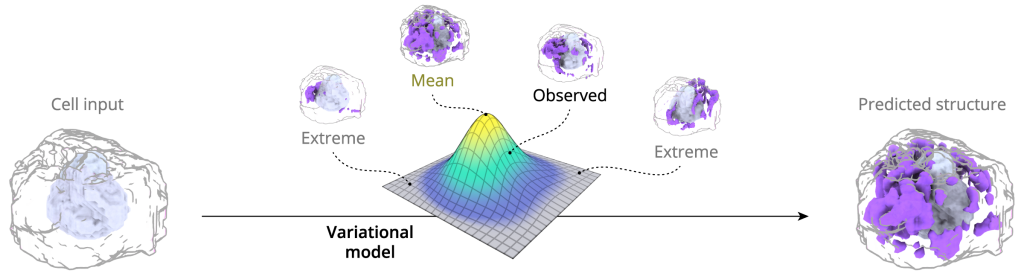
In a summary from the institutes’ Integrated Cell website, “the Allen Integrated Cell unites two technologies to improve our understanding of how human induced pluripotent stem cells (hiPSCs) vary in both shape and organization. One is a deterministic model, which shows the organization of organelles in particular individual cells, and the other model is probabilistic – showing likely shapes and locations for organelles in any cell – even for cells we have not studied.” To put the probabilistic model into visual perspective, here’s a diagram that outlines the variation model:

”This is a new way to see inside living human cells. It’s like seeing the whole cell for the first time. In the future, this will impact drug discovery, disease research and how we frame basic studies involving human cells,” said Rick Horwitz, Ph.D., Executive Director of the Allen Institute.

The new modelling method will also help to reduce fluorescence toxicity in cells when they are being studied. “Fluorescence microscopy is expensive and toxic to cells; increasingly so when you tag multiple structures,” said Molly Maleckar, Ph.D., Director of Modeling. “Our approach allows scientists to view cells and conduct experiments at the reduced cost of brightfield microscopy, with the structure-identifying power of fluorescence microscopy – and without its toxic effects. It’s really the best of both worlds.”

The full press release can be found here.

Are you pushing the technological boundaries of disease research or cellular biology? Did you know your R&D experiments could be eligible for the R&D Tax Credit and you can receive up to 14% back on your expenses? To find out more, please contact a Swanson Reed R&D Specialist today or check out our free online eligibility test.

Who We Are:

Swanson Reed is Texas’ largest Specialist R&D tax advisory firm, offering tax credibility assessments, claim preparation, and advisory services. We manage all facets of the R&D tax credit program in Texas, from claim prep & audit compliance to claim disputes. 

Swanson Reed regularly hosts free webinars and provides free IRS CE and CPE credits for CPA’s.  For more information please visit us at www.swansonreed.com/webinars or contact your usual Swanson Reed representative.

“Be seen. Be safe.”: Smart helmet pairs with Apple Watch, signals via hand gestures

bike lock station

The days of pushing signal lights on a bike’s handle bars are over—say hello to the Lumos helmet. The helmet (compatible with iOS) allows riders to signal which way they will turn with nothing more than a hand gesture.

To do so, riders simply pair the helmet with their iPhone via Bluetooth, which is then calibrated with the appropriate hand signals via the Apple watch. When in use, the hand motions that were calibrated are then displayed via 11 LED lights, almost like the blinker on a vehicle.

This innovative Lumos helmet not only protects cyclists that choose to go on a midnight ride, but it also offers various impressive tracking qualities, such as distance traveled, speed, and time. The helmet can even sense when a rider is applying the brakes to slow down, which again, looks similar to when a vehicle puts on the brakes; except it’s on the back of the rider’s head.

The Lumos website describes its product as “the world’s first smart bike helmet that beautifully integrates lights, hard brake, turn signals, and helmet into a single cohesive whole.” The helmet is weatherproof and safety certified. It also boasts a rechargeable battery and integrated lights. Check it out for yourself by clicking here.

“Lumos started with a pair of engineers asking themselves how they could improve their own cycling experience and safety on the road. We loved commuting to work by bike, but all too often it’d feel so dangerous. So we decided to make a solution. A helmet that can make us and our intentions more visible. We announced the idea out to the public and fellow cyclists seemed to love it. The rest is history.”

Are you developing a technology that helps with the well-being and safety of cyclists? Did you know your R&D experiments could be eligible for the R&D Tax Credit and you can receive up to 14% back on your expenses? To find out more, please contact a Swanson Reed R&D Specialist today or check out our free online eligibility test.

Who We Are:

Swanson Reed is the largest specialist R&D tax credit consulting firm in the United states.  We solely provide services related to the R&D credit and are the only firm in the United States to offer free live webinars on a daily basis. Click here for more information.

The Longevity of Batteries: From lithium-ion to lithium-sulfur, latter signals new age in battery life

battery

It’s 2018, and when your phone battery dies, it feels like you die along with it–at least temporarily. Not being able to check social media, keep up with work emails, or access a map with directions to the latest craft beer taps seems (almost) anxiety inducing; for me it does, anyway. By way of the brilliant minds at The University of Texas at Dallas, the post-mortem phone blues may occur less frequently, thanks to their research and development efforts to create an efficient lithium-sulfur battery.

According to Dr. Kyeongjae “K.J.” Cho, a professor with research interests in renewable energy at UT Dallas, lithium-sulfur batteries “are less expensive to make, weigh less, store almost twice the energy of lithium-ion batteries and are better for the environment.”

“A lithium-sulfur battery is what most of the research community thinks is the next generation of battery,” Cho said. “It has a capacity of about three to five times higher than lithium-ion batteries, meaning if you are used to a phone lasting for three hours, you can use it for nine to 15 hours with a lithium-sulfur battery.”

To make the lithium-sulfur battery more efficient than a traditional lithium-ion battery, Cho and other researchers discovered that molybdenum, a metal that easily forms compounds with other elements, improved stability and compensated for the poor conductivity of sulfur, which makes lithium-sulfur batteries more practical. There are downfalls, however.

In an article for Nature Nanotechnology, the researchers explain, “Despite many advantages, Li–S batteries are plagued with practical issues that limit their applications: (1) the poor electronic conductivity of sulfur that retards electron transfer during the charge/ discharge processes; (2) the formation of intermediate polysulfides generated during cycling, which leads to the shuttle effect and increases the impedance of both electrodes; (3) the intrinsic issues of Li-metal anodes, which are often associated with uncontrollable dendrite formation during repeated Li deposition and dissolution processes; and (4) the formation of an unstable solid electrolyte interphase (SEI) layer between the electrolyte and Li metal due to inhomogeneous deposition of Li. These issues lead to the reduction of Coulombic efficiency and the subsequent fast termination of battery life.”

Despite the downfalls, it’s arguably a matter of time before R&D initiatives, such as the one above, brings forth a commercially available lithium-sulfur battery.

Are you developing a rechargeable energy solution? Did you know your R&D experiments could be eligible for the R&D Tax Credit and you can receive up to 14% back on your expenses? To find out more, please contact a Swanson Reed R&D Specialist today or check out our free online eligibility test.

Who We Are:

Swanson Reed is Texas’ largest Specialist R&D tax advisory firm, offering tax credibility assessments, claim preparation, and advisory services. We manage all facets of the R&D tax credit program in Texas, from claim prep & audit compliance to claim disputes. 

Swanson Reed regularly hosts free webinars and provides free IRS CE and CPE credits for CPA’s.  For more information please visit us at www.swansonreed.com/webinars or contact your usual Swanson Reed representative.
AI ‘Fortune-telling’: Texas-based firm creates AI algorithm to prevent costly machine downtimes

gears

Veros Systems, a Texas-based AI tech firm, helps machinery owners to “gain actionable insights on rotating equipment reliability, performance and process abnormalities using only electrical signal analytics.” In essence, Veros has created a technology that can predict system failures using electrical waveform analysis. What does that mean, exactly?

According to the Veros website, their technologies use “edge measurements and processing,” which combines “rich electrical waveform data with machine learning and AI-based algorithms – leveraging over a decade of historical and event data – to provide predictive insights into machine operation and health, making the Industrial Internet of Things (IIoT) a reality.” To put it simply, Veros has created a technology that predicts mechanical failures; before they happen.  

Knowing when a machine will break down can help companies to decrease downtimes, improve efficiency and optimize maintenance, thus helping to cut costs and boost profits. In a recent statement, Harry Brekelmans, Projects and Technology Director at Shell Global, said, “We estimate that Veros could deliver an additional $300 million a year of production that would otherwise have been lost by unplanned shutdowns.” Impressive, to say the least!

Are you developing a technology that uses AI-based algorithms to deter production delays? Did you know your R&D experiments could be eligible for the R&D Tax Credit and you can receive up to 14% back on your expenses? To find out more, please contact a Swanson Reed R&D Specialist today or check out our free online eligibility test.

Who We Are:

Swanson Reed is Texas’ largest Specialist R&D tax advisory firm, offering tax credibility assessments, claim preparation, and advisory services. We manage all facets of the R&D tax credit program in Texas, from claim prep & audit compliance to claim disputes. 

Swanson Reed regularly hosts free webinars and provides free IRS CE and CPE credits for CPA’s.  For more information please visit us at www.swansonreed.com/webinars or contact your usual Swanson Reed representative

Surviving Hurricanes and Hopelessness: App to ‘rescue’ those in need, post-natural disaster

phone

The frequency of natural disasters is on the rise in the United States. From Hurricane Katrina, to the more recent Hurricane Irma, the need for efficient, temporary resettlement for displaced persons will, arguably, also rise. The good news? There may be an app for that!

Adam Huminsky and Brian Hilinski, founders of the Charlotte-based startup, Harmany, were tired of watching evacuees struggle to find places for temporary shelter in the wake of catastrophic events, such as hurricanes. Huminsky said, “People have grown tired of watching disasters unfold, with no way to help until much later […] Harmany was created to give everyone the ability to make a difference in the moment.” The application connects the profile of an evacuee (person with needs) with a host (person with offerings). In an article featured on techstartups.com, “After completing a series of security measures, profiles are visible on an interactive map. Harmany believes secure matches can be made in as little as two hours.

The app will offer other benefits, such as less crowding on roads, specifically evacuation routes, which translates to safer highway conditions. There is hope that the application will also reduce surge pricing for essential needs, such as hotel rooms.

Developing an app that will improve the lives of others? Did you know your R&D experiments could be eligible for the R&D Tax Credit and you can receive up to 14% back on your expenses? To find out more, please contact a Swanson Reed R&D Specialist today or check out our free online eligibility test.

Who We Are:

Swanson Reed is Texas’ largest Specialist R&D tax advisory firm, offering tax credibility assessments, claim preparation, and advisory services. We manage all facets of the R&D tax credit program in Texas, from claim prep & audit compliance to claim disputes. 

Swanson Reed regularly hosts free webinars and provides free IRS CE and CPE credits for CPA’s.  For more information please visit us at www.swansonreed.com/webinars or contact your usual Swanson Reed representative


Neiman Marcus iLab using innovation to advance luxury

Neiman Marcus 1

On Sunday, February 11, 2018, Karen Katz retired as CEO for Dallas-based luxury retailer Neiman Marcus. She is succeeded by Geoffroy van Raemdonck from Ralph Lauren. Given the current economic and social climate, the CEO position is not an easy one to fill as consumer trends are ever-changing in the digital age. With the expansion of e-commerce, failing customer foot traffic into physical stores, and nearly $5 billion in debt, the 110-year-old retailer’s longevity is not guaranteed. But perhaps its ongoing investment into the Neiman Marcus iLab could offer some relief for the company’s problems.

In this digital age, one of the primary questions the company has asked is, “How do we take the experiences [the customer] is having online and make that really seamless [in store] from a personalisation perspective?” The Neiman Marcus iLab may offer some solutions. Initiated in 2012, the iLab is under the direction of Scott Emmons whose background in Information Technology gives him unique insight into utilizing technology to enhance the customer experience. He maintained that innovative technology is “not a silver bullet that will save the world” but it is nevertheless a critical piece in a complicated retail puzzle. One of the iLab’s iconic innovations was the Memory Mirror which allows customers to see how a piece of clothing looks at all angles.  Emmons explained, “You don’t have to ask your husband or girlfriend or a sales associate how it looks in the back. You can see for yourself.” As of 2017, 38 Memory Mirrors can be found in 20 of Neiman Marcus’ stores. The project was so successful that it has been converted in other applications, such as at the beauty counters where customers can see digitally how a cosmetic product will look on them. Another innovation was Neiman Marcus’ free phone charging lockers, rolled out in 2014.  The kiosk makes customers use their phone numbers as an unlock code and doubles up as a customer acquisition tool.

Innovation isn’t cheap, however, and ideas must first go through a rigorous review by executives. Afterwards, they are prototyped in the lab to test proof of concept before they can be implemented in stores. Emmons said, “In the end, when you do technology right, you do have to pay for it. There is a cost associated with getting into the store, so I have to think about technology that is scalable and the business is going to want an ROI on the technology.”

“Not everything works,” Emmons said. “Most of the time, it won’t…[Y]ou have to think about these experiments not as failures, but as learnings that can be applied to future projects.”

The Neiman Marcus iLab demonstrates technical risk. Sound familiar? If you’re also engaging in technical risk and conducting experiments, did you know you could be eligible for the R&D Tax Credit and can receive up to 14% on your expenses? To find out more, please contact a Swanson Reed R&D Specialist today or check out our free online eligibility test.

Swanson Reed regularly hosts free webinars and provides free IRS CE credits as well as CPE credits for CPA’s.  For more information please visit us at www.swansonreed.com/webinars or contact your usual Swanson Reed representative

Mobility and disability are no longer mutually exclusive thanks to Go Baby Go

GoBabyGo spill resistant cup

“Ever since he was a baby, we’ve always said we want him to be the same as anyone else, he is no different,” Brenda Fernandez said of her son Abel Salazar. “We never told him you can’t do it.” Abel, 4 years old, was born without fully formed bones in his body, making mobility and other functions difficult. Last month, engineering math students from Victoria West High School in Texas retrofitted a battery-powered miniature red jeep as part of the Go Baby Go program and soon, Abel was on the move.

Brenda said, “He was scared at first, then he saw the Captain America sign and his face turned into a big huge smile. After that, he got on [the car].” Abel is part of the Preschool Program for Children with Disabilities where therapy and specialized programs help him develop cognitive, social, and mobility skills. By learning to drive the electric jeep, Abel is more likely to be a candidate for a mobility chair in the future. “The ultimate goal is independence,” said Amanda Kern, occupational therapist.

Last September, the engineering math students from Victoria High School began making adjustments to the red jeep which required testing and re-testing. Upgrades included modifying and stabilizing the seat’s position and rewiring the foot accelerator to the steering wheel. Safety features like a five-point strap belt were also added and the electrical work had to be rewired. The students said that the project gave them a real world look into math and engineering, and that the project was more fun than work.

Abel’s red jeep project was part of Go Baby Go, a nationwide program that modifies off-the-shelf battery operated toy cars to make them accessible for children with disabilities. The program’s founder had identified a gap in the market, particularly that mobility devices for young children were non-existent while adult motorized wheelchairs cost upwards of $17,000. In comparison, by modifying existing battery operated toy cars, the total cost is only around $200. The Go Baby Go program offers children with disabilities to develop independent mobility, cognition, coordination, balance, social, and other skills.

As Abel drove the red jeep throughout the halls of Dudley Elementary School and honked the horn, he smiled. “There’s no better feeling than seeing your son smile,” Brenda stated.

Are you working on experiments to retrofit existing off-the-shelf products and make them accessible for people with disabilities? Did you know your experiments could be eligible for the R&D Tax Credit and you can receive up to 14% on your expenses? To find out more, please contact a Swanson Reed R&D Specialist today or check out our free online eligibility test.

Who We Are:

Swanson Reed is Texas’ largest Specialist R&D tax advisory firm, offering tax credibility assessments, claim preparation, and advisory services. We manage all facets of the R&D tax credit program in Texas, from claim prep & audit compliance to claim disputes.  

Swanson Reed regularly hosts free webinars and provides free IRS CE and CPE credits for CPA’s.  For more information please visit us at www.swansonreed.com/webinars or contact your usual Swanson Reed representative